From Classroom to Coaching: Why You Should Consider Becoming an Executive Function Coach

Updated: Apr 7
Last updated: April, 2026
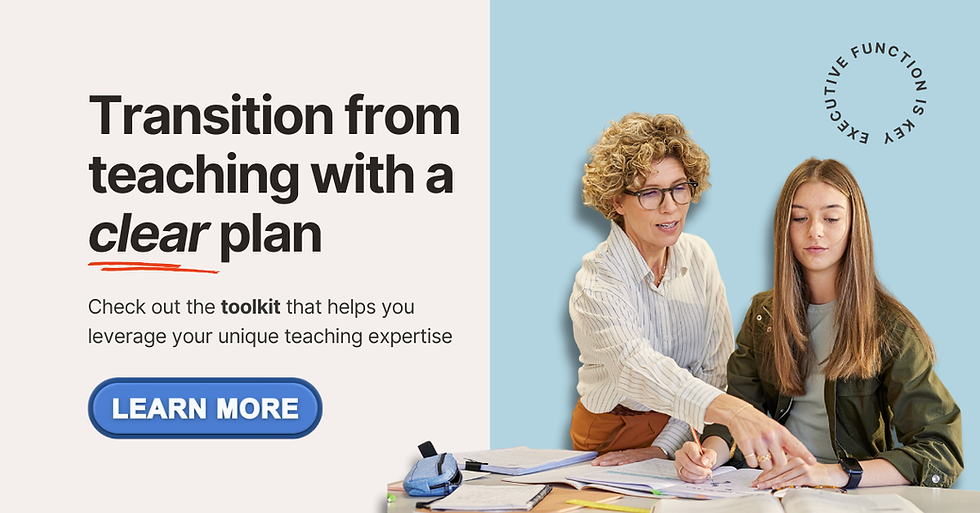
What if the skills that made you effective in the classroom are the very same ones that could help you build a more flexible and rewarding career outside of it?
In this post, you’ll learn what executive function coaching is, how it helps students build essential life skills, and why teachers are often a natural fit for this work.
Table of Contents:
Are you a seasoned educator yearning for a career shift?
Have you considered leveraging your skills to make a broader impact beyond the traditional classroom?
Are you ready to embrace the dynamic realm of online coaching?
Welcome to the exciting domain of Executive Function Coaching, an increasingly prevalent field where your passion for education and personal development can have a transformative impact on lives across the globe.
Ready to unlock a world of new possibilities? Let's begin!👇
What is Executive Function Coaching?
At the heart of personal, academic, and professional success lie executive functions.
These include critical cognitive skills like:
planning
organization
time management
emotional regulation
and adaptability to change
Executive Function Coaching focuses on enhancing these essential skills, empowering individuals to function more effectively in their daily lives.
If you prefer a video on this topic, watch this👇
In coaching sessions, coaches help students turn good intentions into real action.
That might look like:
helping a student map out a plan for missing assignments
break a big project into smaller steps
create a weekly schedule
or figure out why they keep getting stuck when it is time to start
Coaches also help students build self awareness.
Instead of simply telling a student to “get organized” or “manage your time better,” they work with the student to notice patterns, identify obstacles, and test strategies that actually fit how their brain works.
The Impact of Executive Function Coaching
Executive Function Coaches help individuals of all ages, especially those with ADHD, learning disabilities, or other neurodevelopmental differences.
Many of these clients are bright and capable, yet they struggle to consistently plan ahead, manage time, stay organized, follow through, or regulate emotions when life gets stressful.
They often know what they need to do, but have a hard time doing it consistently.
That said, executive function coaching is not only for people with diagnoses.
Anyone who wants to improve productivity, reduce overwhelm, and function more effectively in daily life can benefit from this kind of support.
For many clients, the impact goes far beyond getting assignments turned in or showing up on time.
It can change how they see themselves.
A student who once felt lazy, scattered, or incapable can start to realize they are fully capable, they just needed the right support and tools.

For example, imagine a high school student with ADHD who keeps missing assignments, forgetting materials, and shutting down every time teachers or parents bring up school.
An executive function coach might help that student create a simple weekly planning routine, break assignments into smaller steps, set up a system for tracking work across classes, and practice emailing teachers when they need clarification.
After a few months, that student may still have challenges, but they are turning in more work, feeling less overwhelmed, and starting to believe they can handle school.
That kind of shift is powerful, and it is one of the reasons this work is so rewarding.
Why Teachers Make Great Executive Function Coaches
Teachers make great executive function coaches because so many of their existing skills already transfer.
They know how to:
build trust
break down overwhelming tasks
support struggling students
and adjust their approach based on individual needs
They also understand that when a student is missing work, procrastinating, or shutting down, the issue is usually deeper than motivation.
Teachers are used to looking beneath the surface and helping students develop the tools, structure, and support they need to move forward.
For many teachers, executive function coaching feels like a natural next step.
It gives them the chance to keep doing meaningful work with students in a more personalized, practical, and sustainable way.
At EFCA, we've had many classroom teachers get certified as executive function coaches and now run thriving businesses.
For example, check out EFCA graduate, Alison Eber. She was a classroom teacher for 15+ years and now runs her EF coaching business serving over 40 students.👇

You can view the full library of graduate case studies here.
How to Transition to Executive Function Coaching
Embarking on this career involves several key steps.
First, a comprehensive understanding of executive functions and coaching principles is essential.
To start, you can watch my professional development series made for educators on the executive function foundations here.
Next, developing your personalized coaching style, often a blend of cognitive-behavioral approaches, mindfulness techniques, and practical tools.
Finally, gaining a formal certification can enhance your credibility in the field.
Undoubtedly, transitioning from the classroom to digital coaching requires courage and commitment.
Yet, the rewards of becoming an Executive Function Coach - from the flexibility of online coaching to the profound impact on your clients' lives - make it a fulfilling journey worth considering.
Ready to take the next step toward becoming an Executive Function Coach?
Apply for certification and get a free 15-minute coaching session with me where we can map out a plan forward together and get you closer to a flexible, profitable, sustainable career in executive function coaching.

This could be the career transformation you've been seeking.
Unleash the power of executive functions, and start making a global impact today!
The Bottom Line
Executive function coaching can be a powerful next step for teachers who want to keep making a real difference without staying in a role that no longer fits their life or energy.
The same skills that help you support students in the classroom, like building trust, breaking tasks into manageable steps, noticing patterns, and helping students develop confidence, are the very skills that make strong executive function coaches.
To get started, apply for certification here and get a free 15-minute coaching session with me.
Hope this helps 🤙🏻
FAQs
Do I need to be a classroom teacher to become an executive function coach?
No. While classroom teachers often make great executive function coaches, you do not need teaching experience to do this work well.
People from backgrounds like special education, school counseling, speech language pathology, psychology, social work, coaching, parenting, and other helping professions often bring highly relevant skills, especially if they know how to build trust, support growth, and help others develop practical systems.
What does an executive function coach actually do with clients?
Executive function coaches help clients improve skills like planning, organization, time management, emotional regulation, and follow through. Sessions often focus on breaking down tasks, creating routines, building accountability, solving real-life challenges, and helping clients find strategies that actually work for their brain.
Why is a career in executive function coaching flexible and sustainable?
Executive function coaching can be a flexible and sustainable career because it often gives you more control over your schedule, caseload, and work environment.
Instead of managing the nonstop demands of a classroom or rigid system, you can do focused, meaningful work with clients in a way that better supports your time, energy, and long term well being. You can work remote or in-person, choose your hours, and be intentional with the students you work with.
This article is a part of the larger category of:
Related Articles:
Want support in transitioning to executive function coaching?
Consider joining hundreds of educators and professionals who have completed our executive function coaching certification and are building profitable executive function coaching practices using their teaching experience.
You'll gain all the tools, templates, and techniques you'll need as a coach, plus you'll make new friends and have a community you can rely on to grow and learn. Learn more.
Here is one of our favorite reviews. You can read all recent reviews on this page.
About Me

Hey! I'm Sean 👋
I'm a former public school special education teacher who realized that executive function skills are more important than knowing when George Washington crossed the Potomac.
Since then, I've made it my mission to teach anyone who will listen about how to develop these key life skills.
In 2020, I founded Executive Function Specialists to ensure all students with ADHD and Autism have access to high-quality online executive function coaching services. We offer online EF coaching and courses to help students and families.
Realizing I could only reach so many people through coaching, in 2021 I started the Executive Function Coaching Academy which trains schools, educators, and individuals to learn the key strategies to improve executive function skills for students.
In 2023, I co-founded of UpSkill Specialists, to provide neurodivergent adults with high-quality executive function coaching services.
When not pursuing my passions through work, I love spending time with my family, getting exercise, and expanding my brain through reading. You can connect with me on LinkedIn.